
Goff, Tanna, and Ocean House
Washington BlackThis thread follows the Goffs’ uneven family bond, Tanna’s growing partnership with Washington, and the struggle to make a living marine exhibition while negotiating recognition and belonging.
increasing Bearing strength in each event
 decreasing
Bearing strength in each eventdecreasingTanna’s Constrained Freedom
Tanna’s Constrained Freedom
A Capable Daughter
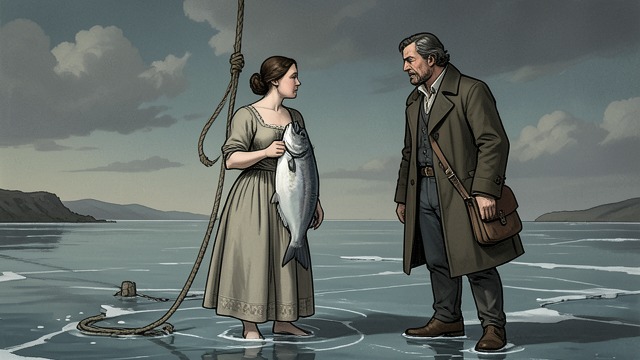
Tanna Goff lives and works closely with her father, the marine zoologist G. M. Goff, but their partnership is unequal in practice. She knows marine life well and contributes to his research, yet he often makes plans without consulting her and assumes she will accommodate them.
Her independence appears in small acts: she chooses to go to the shore, dresses outside conventional expectations, and resists restrictions on movement. Her broken wrist limits her fieldwork, but it does not diminish her knowledge or her insistence on having a life of her own.
Care and Friction
Washington sees the affection between father and daughter alongside the strain. Tanna is devoted to Goff, yet his self-absorption and casual authority leave her to manage the emotional work of keeping their relationship smooth.
Goff’s age and isolation deepen the bond without resolving its imbalance. Tanna’s struggle is not simply to leave her father behind; it is to be recognized as a person whose ambitions and judgments do not exist only in support of his projects.
The Artist at the Shore
The Artist at the Shore
An Encounter at a Distance
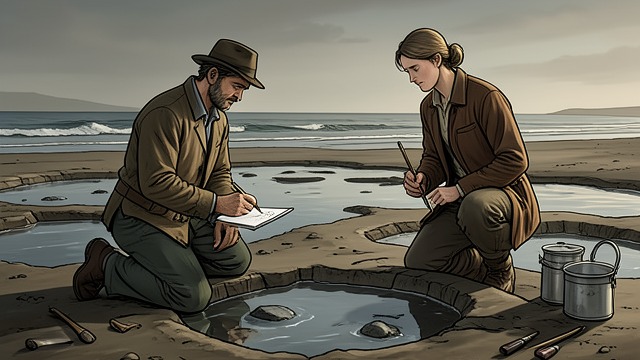
Washington and Tanna first share the same shoreline without knowing each other. He sketches tide-pool life while she works at her own easel, and for days they exchange only distant greetings, preserving the solitude that has become important to Washington.
When Tanna finally approaches him, she asks him to teach her to draw. Their first conversation unsettles Washington: she is direct, curious, and attentive in a way he is not accustomed to receiving, while he is still wary of intimacy and of being judged by his appearance.
Knowledge in Both Directions
Washington assumes he can teach Tanna about the marine life he observes, then discovers that she already knows far more about many of the creatures. Her request concerns artistic representation, not natural history, and the misunderstanding exposes how quickly he has mistaken her for a novice.
The correction establishes a more reciprocal relationship. Tanna has expertise Washington respects, and Washington has an artistic skill she hopes to develop; their meeting becomes a collaboration between people who recognize one another’s capacities without erasing their differences.
The Father’s Permission
The Father’s Permission
A Request Made Indirectly
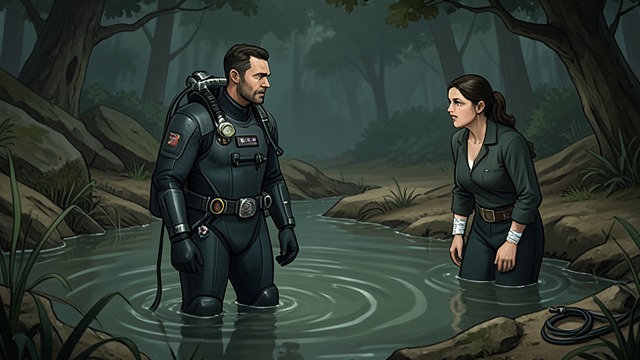
When Tanna seeks Washington out, he suspects that she wants him to dive in her place because her wrist has only recently healed. She tells him she came to give him a note and because she wanted to see him; his suspicion hurts her and exposes how fear has narrowed his ability to trust her intentions.
Even so, Washington later agrees to assist with the survey. Goff helps him into an old diving suit and speaks of Tanna as young, a comment Washington hears as a reminder that his enslaved past and visible disfigurement make him unsuitable as a partner for her.
Cooperation Without Ease
The dive is undertaken for Goff’s research, but it opens a possibility beyond collecting dead specimens. Washington finds a vivid octopus and begins imagining a living exhibition in which marine animals can be encountered rather than reduced to preserved objects.
Tanna’s presence matters to the idea’s development: she understands the scientific and practical problems of sustaining aquatic life, and she takes the proposal seriously. The family’s work begins to shift from a father’s expedition toward a shared project shaped by Washington’s invention and Tanna’s knowledge.
The Living Exhibition
The Living Exhibition
From Specimen to Habitat
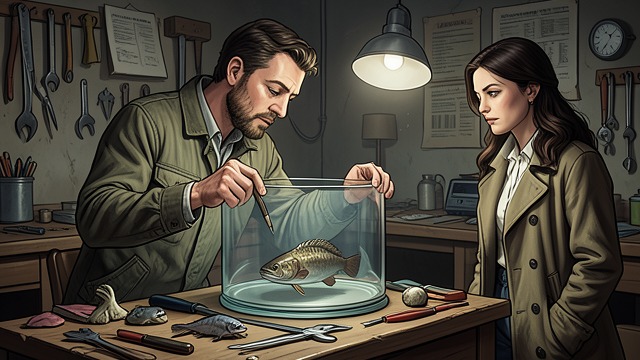
Washington proposes that an exhibition could display living marine organisms in tanks, letting visitors observe their behavior rather than see them only as preserved specimens. Goff is initially skeptical, but the idea draws all three into a sustained discussion of water, oxygen, vegetation, and the needs of different species.
Washington develops the proposal into a practical design. He tests how plants and animals might share a sealed environment, consults a warehouse foreman, and builds a glass tank with a slate base and carefully treated joints to limit harm to sea life.
An Accepted Project
Goff presents the plan to a zoological committee in London, which accepts the idea and provides a building in Regent’s Park. The exhibition will be called Ocean House, transforming Washington’s proposal into a public institution.
The opportunity brings pride and unease together. Washington has helped devise the central concept and solve its technical problems, but he expects that the public record will credit Goff rather than a young Black man without formal scientific credentials. The project can succeed while its creator’s contribution remains unrecognized.
Credit and Partnership
Credit and Partnership
A Shared Working Life
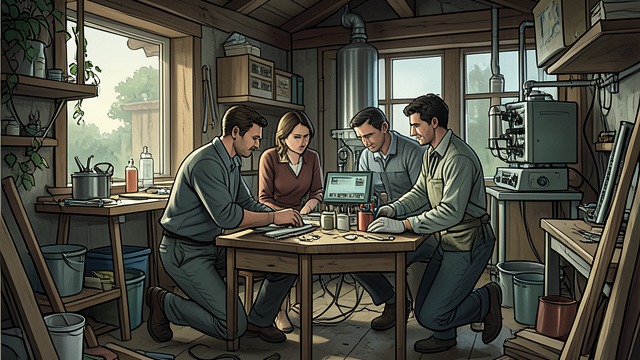
In England, Washington lives in a small garden house near the Goffs and works with Tanna and Goff to prepare Ocean House. Their days involve tanks, specimens, construction materials, and the practical problems of sustaining living organisms in a public exhibition.
Goff’s attitude toward Washington changes through the work and through the prejudice they encounter together. When a visitor treats Washington as an animal to be separated from the public, Goff responds with anger, showing that his respect for Washington has become more personal and more forceful.
The Cost of Recognition
Washington remains proud of the exhibition and conscious that his name may be absent from its history. He sees his calculations and design choices embodied in the project, yet cannot assume that the people with institutional standing will credit him as its originator.
Tanna supports his abilities but cannot make the larger social barriers disappear. Ocean House therefore gives Washington an enduring achievement while leaving unresolved whether artistic and scientific labor can secure public recognition when race and class determine whose authorship counts.
During the Goffs’ months in Nova Scotia
Early 1834, on the Nova Scotia shoreline
After Tanna invites Washington to join the marine survey
After the Nova Scotia dive and before the Goffs travel to England
1836, during preparations for Ocean House in London
